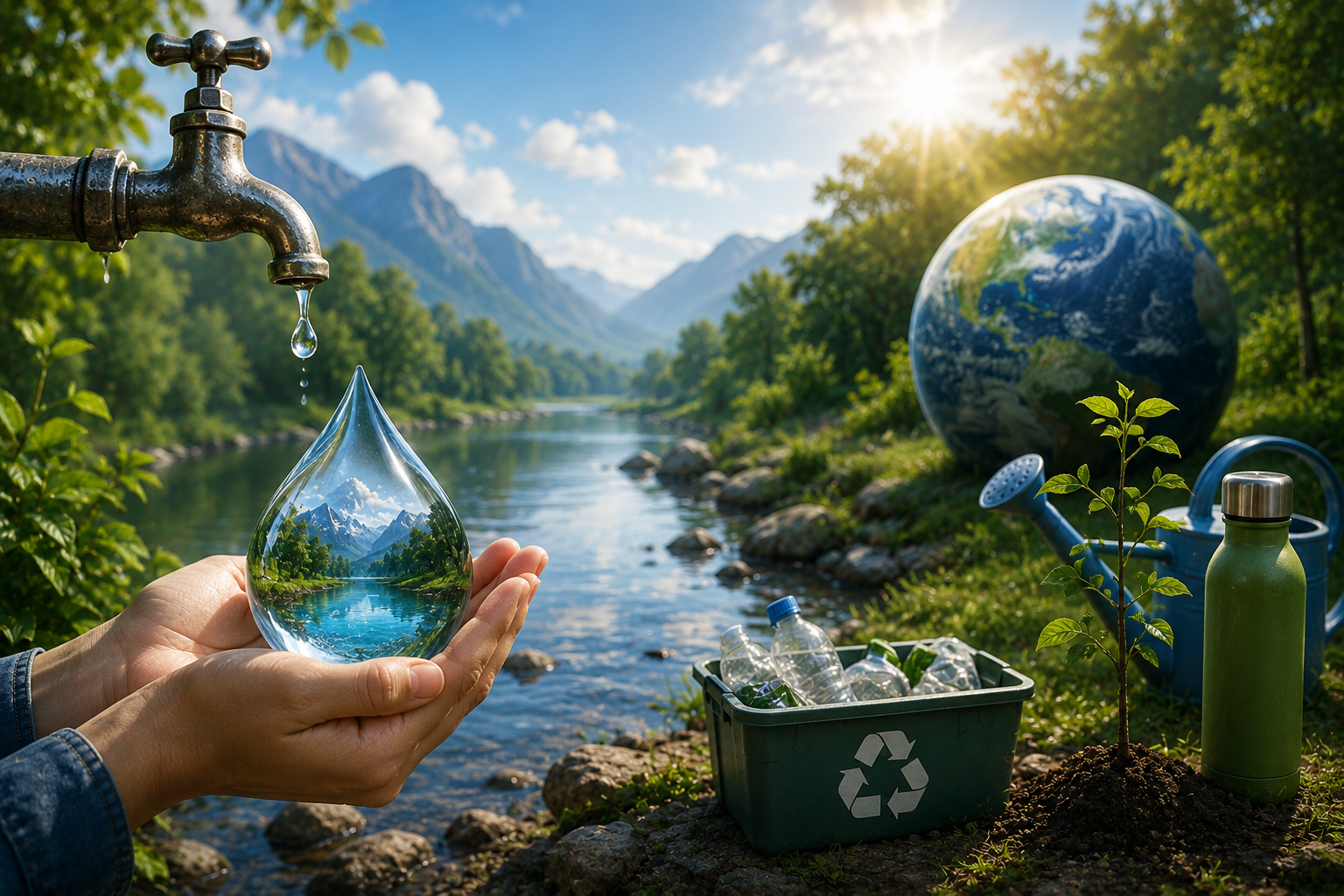
Turn on a tap, and clean water appears. It is so common in many people’s daily lives that we rarely stop to think about how precious it truly is.
We use water for drinking, cooking, farming, cleaning, industry, sanitation, and countless other activities. Yet freshwater is limited, and growing populations, pollution, climate change, and inefficient use are placing increasing pressure on this essential resource.
Every living organism depends on water.
Plants need it to grow. Animals need it to survive. Humans need it for virtually every function of the body.
Agriculture also depends heavily on freshwater. The food we eat requires water to grow, while industries use water in manufacturing and production.
Protecting water therefore means protecting life itself.
Water is often wasted without us noticing.
A leaking tap may seem insignificant, but continuous leakage can waste a surprising amount of water over time. Leaving water running while brushing teeth, taking unnecessarily long showers, or using more water than necessary for cleaning can also contribute to waste.
Individually, these actions may seem small. Collectively, they can make a significant difference.
Everyone can contribute.
Don’t leave taps running when water isn’t needed.
A dripping tap or leaking pipe should be repaired as soon as possible.
Use only the amount of water necessary for washing, cleaning, and other household activities.
Water from certain household activities can sometimes be reused for gardening or cleaning, provided it is suitable and safe for that purpose.
Never treat rivers, lakes, ponds, or other natural water bodies as dumping grounds. Plastic, chemicals, sewage, and other pollutants can damage aquatic ecosystems and make water unsafe.
Climate change can influence rainfall patterns, droughts, floods, and the availability of freshwater in different regions.
This makes responsible water management increasingly important.
Saving water is therefore not simply about reducing a household bill. It is part of a larger responsibility toward communities, ecosystems, and future generations.
Children who learn to respect water early are more likely to develop responsible habits.
Simple lessons can make a difference:
Turn off the tap.
Don’t waste drinking water.
Keep water bodies clean.
Understand where water comes from.
Appreciate the effort required to provide clean water.
These habits can remain with them throughout their lives.
Water connects everyone. The water we protect today may become part of someone else’s future tomorrow.
We cannot create an unlimited supply of freshwater, but we can make much better choices about how we use and protect the water available to us.
Water is easy to appreciate only after it becomes scarce.
Let us value it while it is still available.
Saving water does not require extraordinary actions. It begins with ordinary people making thoughtful decisions every day.
Use water wisely. Protect water sources. Respect the resource that sustains life.
